Editorial control matters

AI Static Global CMS

Build an AI-assisted static CMS process with structured fields, reliable source notes, bounded drafting, editorial approval, preview builds, and corrections.

PRACTICAL FIELD GUIDEPlanning checklist ↓

Connect assisted drafts to an accountable publishing process.

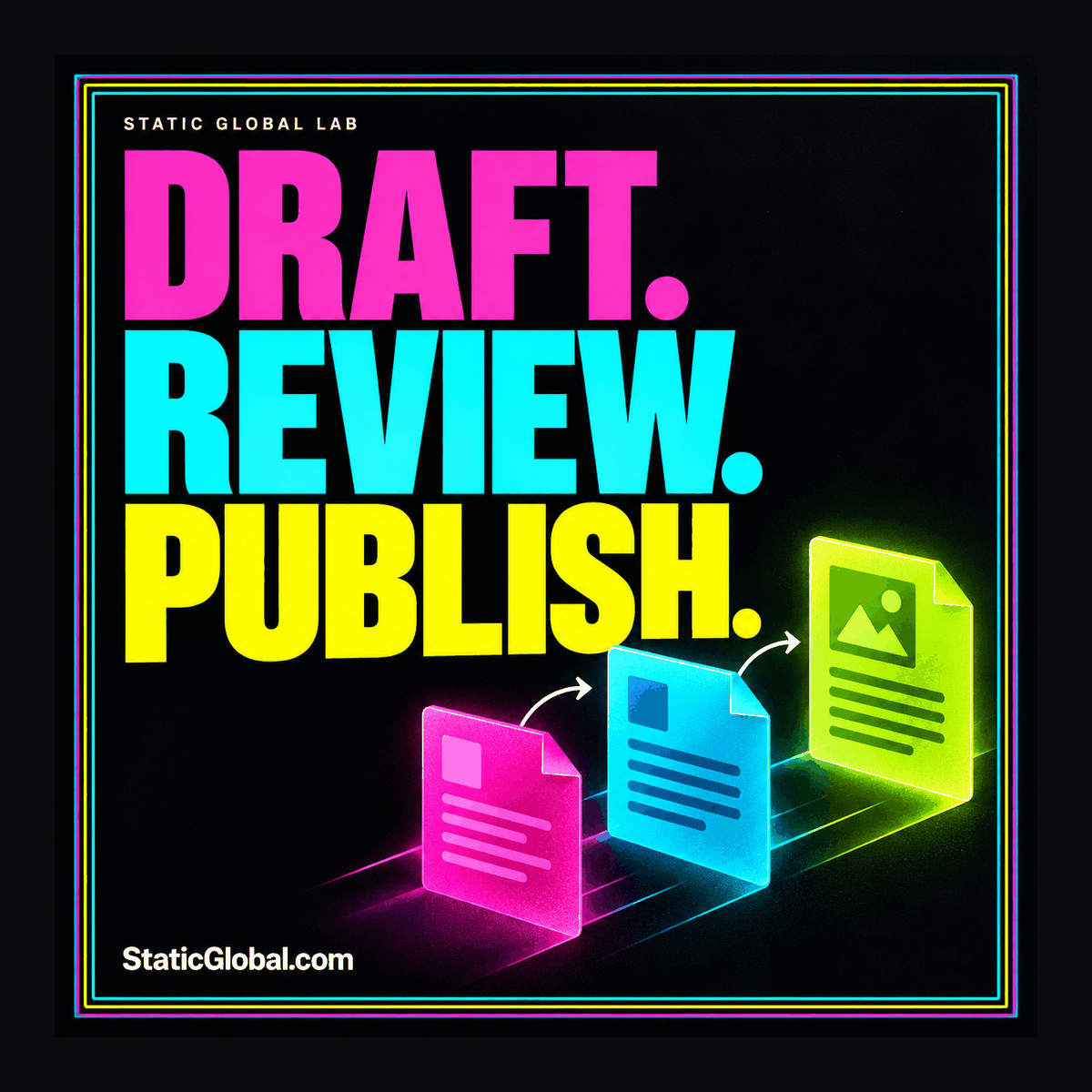
An AI-assisted CMS can help a team prepare outlines, draft from approved notes, suggest summaries, and check content consistency. The workflow still needs explicit rules about evidence, required fields, review, and publication. Decide those rules before extending assistance across a large collection of pages.

Static publishing offers a concrete checkpoint: approved content becomes a known set of public files. Use that checkpoint to validate links, images, metadata, and publishing status. Keep the editorial decision attached to the source content so a later rebuild does not reintroduce a rejected draft or silently change the publication record.

CONSIDERATION / 01

Model the content and evidence

Define required fields such as title, slug, summary, body, image, alternative text, category, and publication date. Use controlled values where consistency matters. Keep source notes beside factual drafts and ask the assistant to flag missing evidence. An address that looks like a citation still needs to be opened and checked against the claim it supposedly supports.
CONSIDERATION / 02

Assign clear review roles

Choose which tasks may be assisted and who approves their output. NIST's Generative AI Profile discusses additional human review, tracking, and documentation as possible responses to generative AI risks. Apply those ideas to your process: define permitted inputs, keep private credentials outside content fields, and separate the ability to prepare a draft from authority to publish it.

CONSIDERATION / 03

Validate a known release

Build the approved revision and inspect the article, archives, related cards, and feed. Check required fields and assets with clear mechanical rules while retaining human judgment for accuracy and usefulness. Record the source revision and publication result. Keep a previous release and correct the source when restoring files so the next build does not reproduce the same issue.

Technical reference: NIST: Generative AI Profile. Use the documentation for implementation details alongside the planning guidance here.

TURN THE IDEA INTO A PLAN

What to check
before you commit.

Use these questions to make the next step concrete, and keep the answers with your project notes.

  • Define required fields and show editors one complete example of each content type.
  • Retain primary source notes and mark claims that still need human verification.
  • Limit assisted tasks and document who can approve and publish their outputs.
  • Confirm drafts remain unpublished and missing assets produce understandable validation errors.
  • Rehearse a correction from source edit through preview, publication, and feed verification.
COMMON QUESTIONS

Work through
the details.

Should an assistant publish articles automatically?

Choose publishing authority according to your team's process and the consequences of errors. A useful starting arrangement lets assistance prepare bounded changes while a named editor checks sources, previews the result, and approves the release.

Does a longer generated article mean better content?

Evaluate whether the page answers its question, supports its claims, and gives readers useful next steps. Length can be one editorial constraint, but it cannot establish quality. Remove repetition and check that examples contribute information beyond the heading.

How should modification dates be handled?

Use a genuine editorial record of substantive changes. Rebuilding assets does not automatically mean every article was updated. The AI-assisted static CMS workflow explains how content states, preview checks, and release records can work together.

FIELD NOTES & PRACTICAL GUIDES

Put it into practice.

Explore all articles
